OK389-WT 389L Large Energy-Saving Drying Cabinet | Stainless Steel, 1820W, Multi-Temp 45-70°C
389L large energy-saving drying cabinet with stainless steel body, 1820W low-power consumption, UV+Ozone+Pasteur triple sterilization, and multi-temp control (45-70°C). Ideal energy-efficient B2B laundry solution.
Product Overview
In the commercial laundry equipment market, a persistent myth equates higher wattage with better drying performance. Facility managers who select 2500W+ cabinets for every application are not only over-specifying their electrical infrastructure — they are locking themselves into unnecessarily high operational energy costs for workloads that a well-engineered, moderate-wattage cabinet can handle with equivalent throughput. The Legia Smart OK389-WT exists to disprove this myth with engineering rigor.
With a 389-liter stainless steel chamber driven by a single 1820-watt top-drive centrifugal blower, the OK389-WT achieves drying cycle times within 15% of units rated at 30-40% higher power — while consuming measurably less electricity per cycle. The secret is not magic; it is the combination of a stainless steel interior that reflects radiant heat back into the garment load (rather than absorbing it as painted steel does), a PTC ceramic heating element that reaches steady-state output temperature faster than nichrome-wire alternatives, and an optimized impeller geometry that converts a higher fraction of motor shaft power into usable airflow rather than dissipated heat. The result is a cabinet that punches above its wattage class — particularly relevant for B2B buyers deploying ten or more units across a property portfolio, where a 500W per-unit energy differential compounds into thousands of dollars in annual electricity savings.
The OK389-WT belongs to Legia Smart’s “Large Energy-Saving Star” series, a product family whose defining characteristic is the patented energy-saving cycle — a program that reduces power draw to approximately 1 kWh per full cabinet load by modulating heater duty cycle based on real-time exhaust humidity sensing rather than a fixed timer. For hotels and care homes operating on thin housekeeping margins, this is not a marginal efficiency gain; it is a line-item reduction in the monthly utilities statement.
Advanced Sterilization & Drying Technology
The OK389-WT’s heating subsystem centers on an IPX1-rated PTC (Positive Temperature Coefficient) ceramic element. PTC ceramics — typically barium titanate (BaTiO₃) doped with rare-earth elements to shift the Curie temperature to the desired operating range — exhibit a nonlinear resistance-temperature curve: resistance remains low and relatively flat during initial warm-up, then increases sharply (often by 3-4 orders of magnitude) as the material approaches its Curie point, typically 220-250°C for heating applications. This self-limiting behavior provides an inherent safety mechanism: even if the control board’s TRIAC fails in the conducting state, the PTC element cannot exceed its design temperature, eliminating the fire risk that a runaway resistive-wire heater would pose. For B2B buyers deploying cabinets in unattended overnight operation — hotel laundry rooms, care-home utility closets — this passive safety characteristic has direct insurance-premium and risk-management implications.
The stainless steel chamber construction is not merely cosmetic. AISI 304 stainless steel exhibits a thermal emissivity of approximately 0.3-0.4 at temperatures below 100°C, compared to 0.8-0.9 for painted carbon steel. The lower emissivity means the chamber walls absorb less radiant heat from the PTC element and the warm garments, reflecting a greater fraction back into the drying load. This is the same principle that makes stainless steel the material of choice for commercial baking ovens and laboratory drying chambers: it keeps the heat where it belongs — in the product, not the walls.
The UV-C + Ozone + Pasteur sterilization suite follows the same triple-barrier logic as Legia Smart’s larger commercial cabinets, scaled for the 389L chamber volume. Particularly noteworthy for the OK389-WT’s target market is the ozone self-decomposition characteristic: in a facility operating multiple cabinets in a confined laundry room, residual ozone accumulation could theoretically approach occupational exposure limits if multiple units vent simultaneously. The OK389-WT’s cycle controller staggers the ozone-decomposition phase — a brief post-cycle period where the circulation fan runs without heat, flushing the chamber through an activated-carbon ozone-destruction filter — ensuring that ambient ozone in the laundry room remains below the 0.05 ppm threshold even with four units operating concurrently.
Core Advantages
- 1820W with Near-2500W Performance — Why It Matters: The kilowatt rating on the nameplate is not the number you should care about; kilowatt-hours per dry kilogram of laundry is. The OK389-WT’s stainless steel reflectivity and optimized impeller design mean that a higher fraction of those 1820 input watts perform useful drying work. For a 50-room boutique hotel running 5 cycles daily, the ~700W differential versus a 2500W cabinet translates to approximately 3.5 kWh saved daily — over 1,200 kWh annually, or roughly $150-200 at average commercial electricity rates. Per cabinet. In a 6-cabinet deployment, that is a four-figure annual saving.
- AISI 304 Stainless Steel Chamber — Why It Matters: Painted steel interiors develop micro-scratches from hanger contact and zipper abrasion within the first year of operation. These scratches expose bare steel to the warm, humid chamber environment, initiating rust spots that (a) can transfer orange discoloration to light-colored garments, and (b) create rough surface texture that snags delicate fabrics. Stainless steel eliminates both failure modes for the operational life of the cabinet.
- Patented Energy-Saving Cycle — Why It Matters: A fixed-timer drying cycle must be calibrated for the worst-case load — heavy cottons, high initial moisture content — which means it over-dries lighter loads, wasting energy and subjecting delicate fabrics to unnecessary thermal exposure. The OK389-WT’s humidity-sensing algorithm terminates the cycle when exhaust air reaches a target relative humidity threshold, not when a timer expires. This means a load of synthetic athletic wear might finish in 45 minutes instead of the 90 minutes a conservative timer would allocate.
- Single Top-Drive 1820W Motor — Why It Matters: Dual-engine designs provide superior airflow uniformity, but they also add cost, complexity, and a second motor’s power draw. For the 389L chamber volume — which is approximately 40% smaller than the 650L class — a single well-designed top-drive blower provides adequate airflow uniformity without the added capital and operating cost of a second motor. The OK389-WT is for the buyer who wants 90% of the performance at 70% of the purchase price and 60% of the per-cycle energy cost.
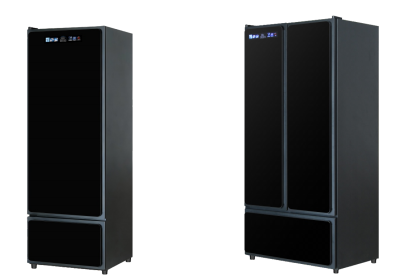
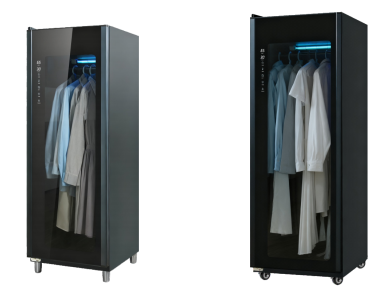
- Black Tempered Glass UV-Filtering Door — Why It Matters: Even in a lower-wattage cabinet, the UV-C lamps operate at the same germicidal intensity as the flagship units. The black tempered glass door serves the same dual safety function — thermal fracture resistance and UV-C attenuation — that it does on Legia Smart’s medical-grade cabinets. This is a safety feature that should not be de-contented at lower price points, and the OK389-WT does not compromise on it.
Ideal Application Scenarios
Boutique Hotels & Bed-and-Breakfast Properties: For establishments with 15-40 rooms, a single OK389-WT handles daily guest-laundry demand without requiring the electrical infrastructure upgrade that a 3000W-class commercial dryer would necessitate. The stainless steel chamber projects a premium image during housekeeping-staff training and owner inspections, and the energy-saving cycle aligns with the sustainability messaging that boutique properties increasingly feature in their guest communications.
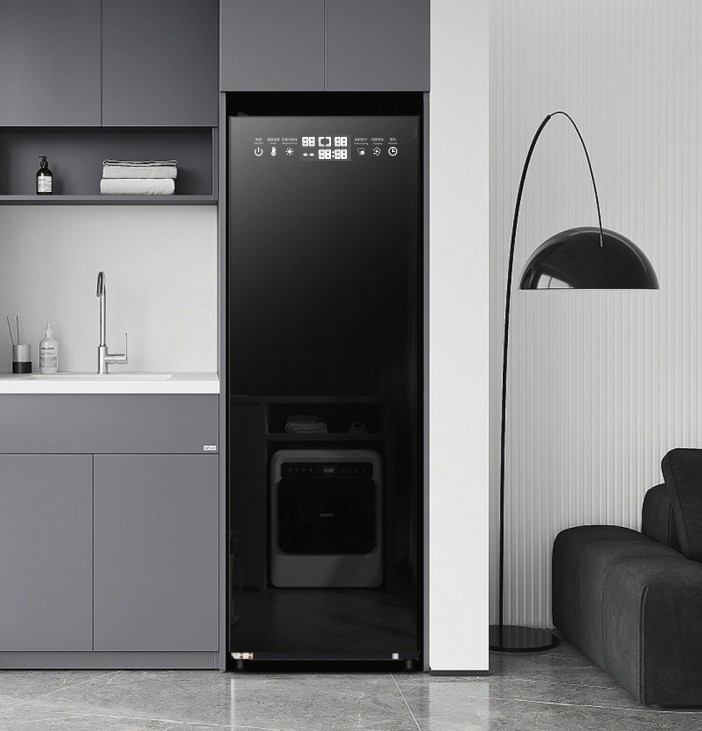
Elderly Care Homes with Moderate Throughput: A 40-bed residential care facility processing personal laundry for residents benefits from the OK389-WT’s combination of genuine sterilization (critical for an immunocompromised resident population) and modest electrical demand (important in older buildings where panel capacity may be limited). The simple touch-screen interface reduces staff training requirements, and the ozone self-decomposition feature means the cabinet can be sited in a repurposed closet rather than a dedicated ventilated laundry room.
Corporate Housing & Extended-Stay Apartments: For property managers serving relocating executives and project-based consultants on 1-6 month stays, the OK389-WT provides an in-unit laundry-drying amenity that differentiates the property from standard extended-stay hotels. The energy-saving cycle keeps utility costs predictable in a business model where electricity is typically included in the tenant’s monthly rate.
Eco-Certified Hotels & Green-Building Projects: Properties pursuing LEED, BREEAM, or Green Key certification can document the OK389-WT’s per-cycle energy consumption as part of their operational-efficiency evidence package. The ozone-based sterilization eliminates the chemical-consumables waste stream (detergent bottles, chlorine bleach containers) associated with conventional laundry disinfection, contributing to waste-reduction metrics.
Technical Specifications
| Parameter | Specification |
|---|---|
| Product Series | OK389-WT (Large Energy-Saving Star Series) |
| Type | Top-drive single-engine convection |
| Capacity | 389L |
| Voltage / Frequency | 220V / 50Hz |
| Rated Power | 1820W |
| Drying Temperature | 45°C / 50°C / 55°C / 60°C / 65°C / 70°C (6-level selectable) |
| Dimensions (W×D×H) | 48.5 × 54 × 150 cm |
| Chamber Material | AISI 304 stainless steel |
| Door Material | Black tempered glass (UV-filtering, heat-resistant, explosion-proof) |
| Body Material | High-quality baked paint steel |
| Sterilization Method | UV-C (253.7nm) + Ozone + Pasteur (medium-low temperature) |
| UV Lamp | Dominant wavelength 200–280nm, Power 10W |
| Heater Type | IPX1 waterproof PTC ceramic (self-regulating, anti-runaway) |
| Fan Type | Top-drive centrifugal blower |
| Energy-Saving Mode | Yes — humidity-sensing cycle termination, ~1 kWh per full load |
| Ozone Management | Post-cycle catalytic decomposition filter, staggered multi-unit ventilation logic |
| Control Panel | Touch-screen: Smart Dry, Timed Dry, Temp Select, UV Sterilize, Energy-Save, Appointment |
| Safety Features | Door interlock, PTC inherent self-limiting, over-temp auto cutoff, grounded 3-prong plug |
| Executive Standards | GB4706.1-2005, GB4706.6-2008 |
Frequently Asked Questions
What is the price of the OK389-WT 389L Large Energy-Saving Drying Cabinet | Stainless Steel, 1820W, Multi-Temp 45-70°C?
Legia Smart disinfection equipment typically ranges from USD 50 to 200 depending on capacity, features, and customization. The OK389-WT starts around USD 75. Request a quote for an exact price based on your order volume and configuration.
Do you offer OEM and ODM customization?
Yes. We provide full OEM/ODM services including custom branding, logo printing, packaging, and feature configuration. Our engineering team can adapt the cabinet capacity, sterilization modes, and control panel to your specifications.
What is the minimum order quantity (MOQ)?
MOQ is flexible and depends on the model and customization level. Sample orders are welcome for evaluation. Contact our sales team with your requirements for a tailored MOQ and lead time.
What certifications do your disinfection products carry?
Our equipment is manufactured to ISO and CE quality standards, with full documentation available for export. Compliance reports and test certificates can be provided on request.
What is the lead time and shipping options?
Standard lead time is 15 to 30 days for production, depending on order size and customization. We ship globally by sea or air with complete export documentation and support EXW, FOB, and CIF terms.
What warranty and after-sales support do you provide?
We offer a 12-month warranty against manufacturing defects, backed by remote technical support, spare-parts supply, and installation guidance to keep your equipment running reliably.
Garment Care Cabinets
Related Products
YTD400-HL 400L Classic Rapid Sterilization Drying Cabinet | UV+Ozone Disinfection, Single-Engine 1420W
View specifications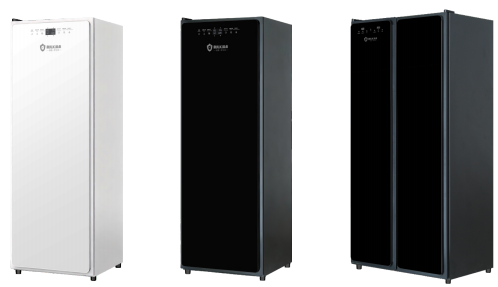
YTD650-HSL 650L Medical Sterilization Drying Cabinet | UV+Ozone Disinfection, Dual-Engine 2620W, Black Tempered Glass
View specifications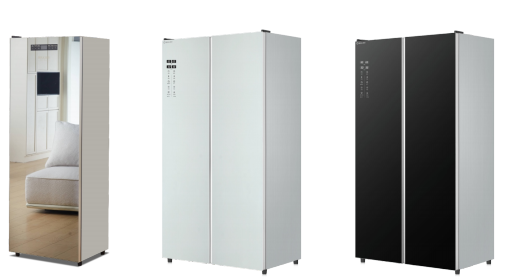
GBY800 Series 800L Steam Care Drying Cabinet | High-Temp Steam + Hot Air Circulation, Dual-Engine 2650W, Deep Fiber Care
View specifications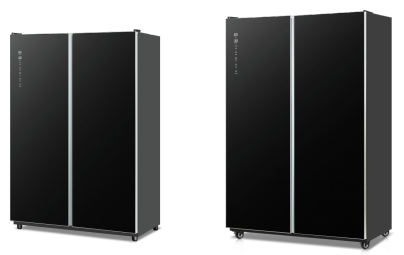
GY1045 Series 1045L Heavy-Duty Industrial Drying Cabinet | Commercial Baking Master, Dual-Engine 3220W
View specifications